
A merger demands a shared vision that people can rally behind.
Even before organizations officially merge, there's a need to bring employees, customers, and the market along, explaining what's changing and why the organizations are moving forward together.
It's precisely during this phase that decisions are made regarding naming, positioning, culture, and how people will continue to feel part of a shared future. Simultaneously, this period sparks new energy, ambition, and the chance to collectively shape the future of the new entity.
That's why a merger impacts far more than just structure or ownership. It's also about how organizations collectively cultivate trust, culture, visibility, and collaboration as they grow towards the future.
-web.jpg)
The legal merger is often completed more quickly than the cultural integration.
During merger processes, a lot of attention is given to structure, processes, responsibilities, and operational integration. This is understandable. However, it's precisely how organizations communicate, collaborate, and provide direction from day one that determines the level of trust, stability, and collective momentum generated throughout the process.
Questions often arise immediately:
- Which name will be retained?
- Will a new identity be forged?
- How will teams be integrated?
- Which culture will take precedence?
- What will remain familiar to customers and employees?
- How do we prevent an 'us vs. them' mentality within the organization?
That's why mergers often create a need for more than just integration. Organizations seek a shared narrative where employees, customers, and the market understand how existing strengths will collectively build something new.
New collective energy demands decisive choices.
During mergers, many organizations feel pressure to quickly establish clarity. This is understandable. However, this very pressure often creates momentum to visibly guide the organization into a new phase together.
A new name, shared positioning, or refreshed image can help to quickly foster recognition, clarity, and connection – provided these choices credibly align with the culture, history, market position, and future ambitions of the new entity.
That's why mergers demand decisive choices regarding positioning, brand architecture, communication, and the balance between familiarity and innovation.
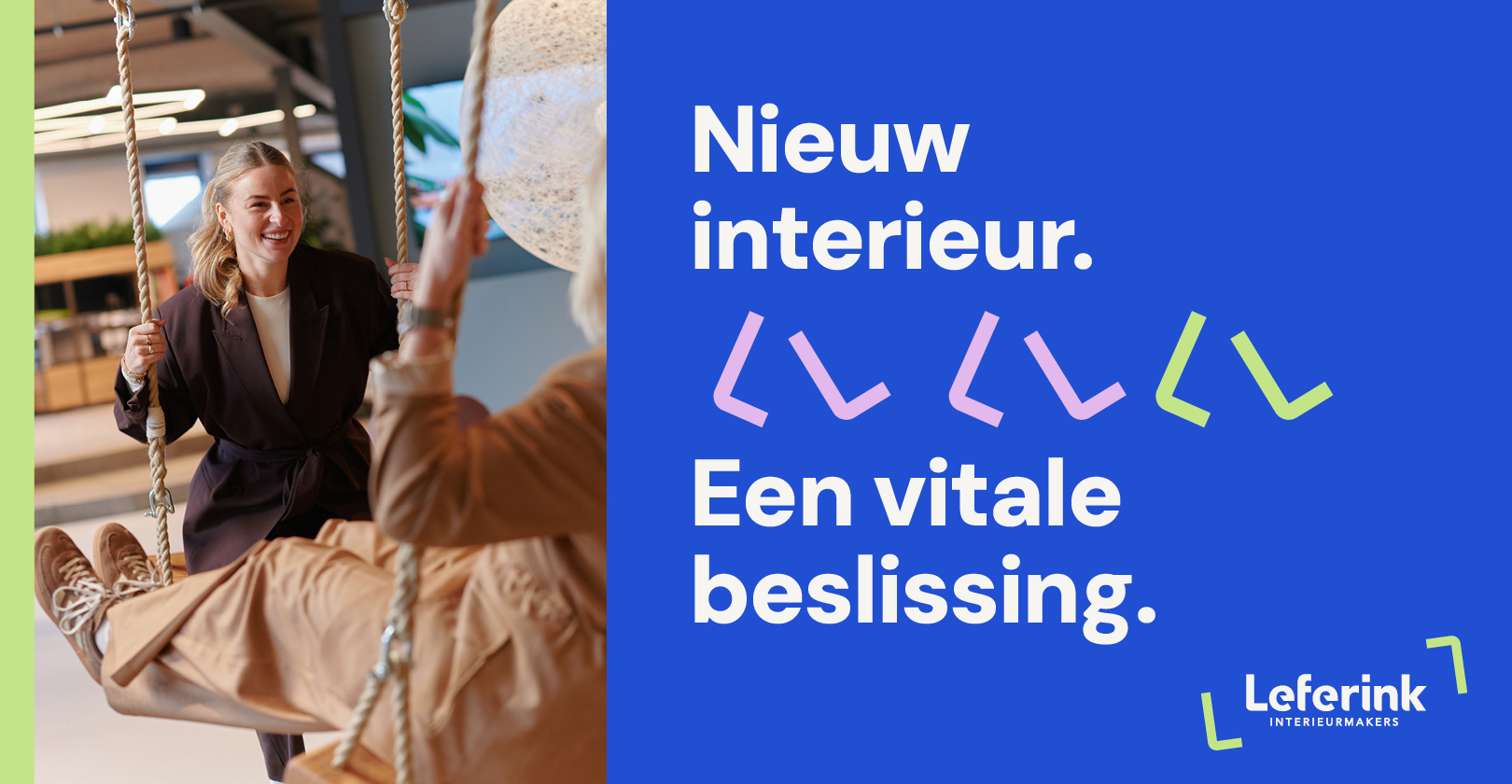
Leferink Interior Designers
For Leferink and KP Interieur, we developed a shared brand story that connects both organizations. A single positioning that provides direction for the new organization and its future.
Inspired by what you see? Let's connect.
Case studies
Now more than ever, brands have a responsibility to be attractive to future talent, investors, and (new) customers. Yes, that sometimes involves sustainability or social responsibility. And yes, that goes hand in hand with maintaining commercial success. In fact, it actually improves it. Because brands that are purposeful, profitable, and visionary are the brands that will be worth the most in every respect tomorrow. See for yourself.



Trust is built when people understand the shared direction organizations are moving towards.
During mergers, employees, customers, and stakeholders try to understand what will be retained, what will change, and the direction the new entity is heading.
That's precisely why trust doesn't automatically emerge from a new structure alone. Clarity, leadership, and a recognizable shared direction help organizations bring people along during change, while simultaneously creating space for new energy, collaboration, and growth.
Because mergers ultimately succeed when people feel they are part of the same future.
Branding tomorrows
accelerate towards Tomorrow today
Growth is rarely stalled by a lack of ambition. It is, however, stalled by a lack of time, focus, and continuity. With Branding Tomorrows, we bring direction, execution, and people together. All our creativity and commitment, wrapped in an energetic, results-oriented way of working.
-web.png)
TOMORROW STARTS HERE.
Every challenge starts somewhere. With growth. With doubt. With the feeling that something could be sharper. With silos in the organization. What challenge will your tomorrow begin with?